Safe Handling of Chemical (SHoC)
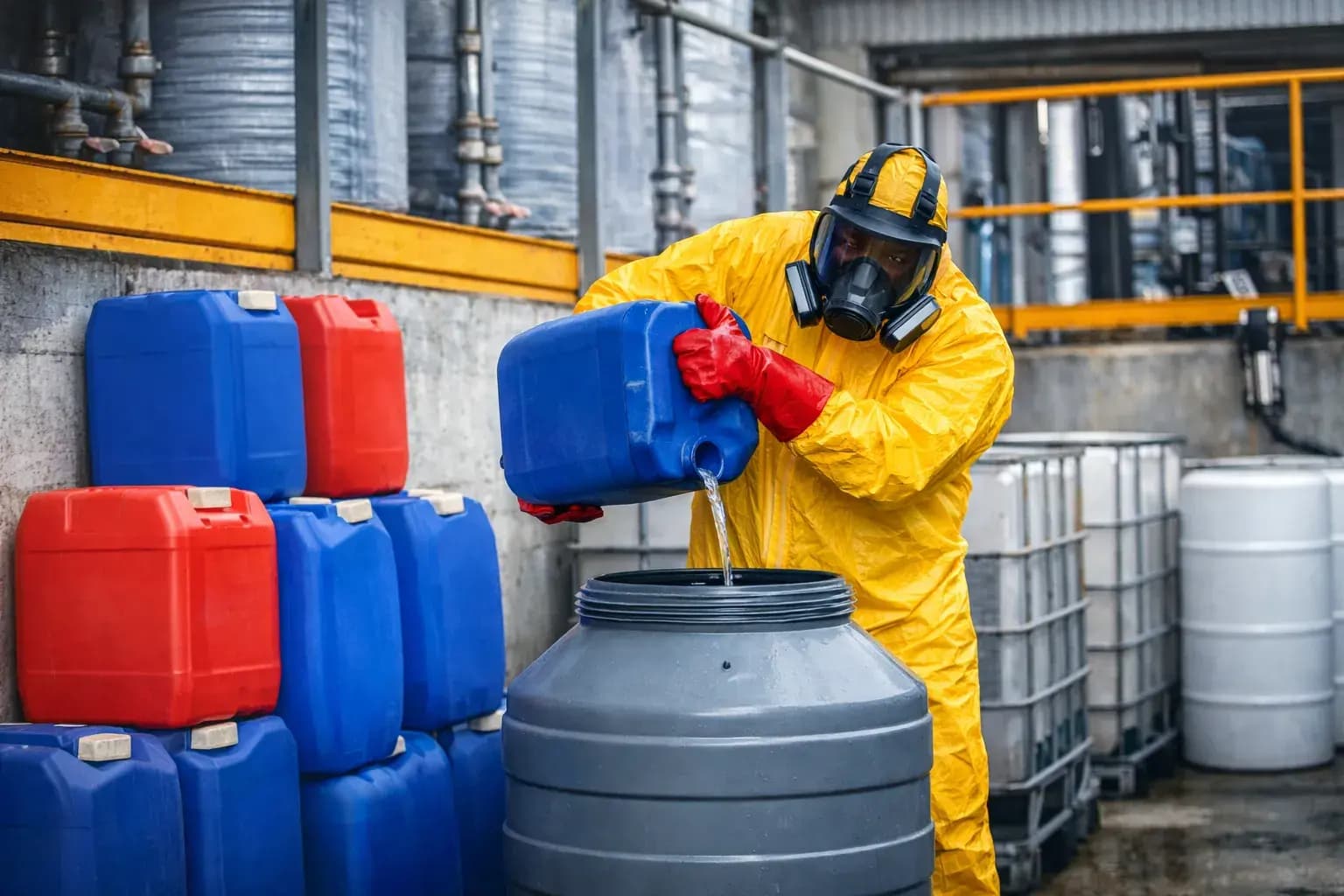
Course overview
Who should attend
- HSE officers and safety professionals
- Chemical handlers and users
- Laboratory personnel and technicians
- Production and manufacturing workers
- Oil and gas professionals
- Maintenance personnel
- Process operators
- Warehouse and stores personnel
- Chemical storage personnel
- Cleaning and sanitation personnel
- Water treatment workers
- Pharmaceutical and healthcare personnel
- Agricultural and agrochemical workers
- Environmental professionals
Course objectives
- Explain the fundamental principles of chemical safety.
- Identify common chemical hazards in the workplace.
- Understand the potential health and physical effects of hazardous chemicals.
- Recognize routes of chemical exposure.
- Interpret chemical labels and Safety Data Sheets (SDS).
- Apply appropriate chemical handling and storage practices.
- Select suitable PPE for different chemical hazards.
- Understand chemical compatibility and segregation requirements.
- Prevent chemical spills, leaks, and uncontrolled releases.
- Apply safe procedures for chemical transfer and dispensing.
- Understand appropriate chemical waste management practices.
- Respond appropriately to chemical spills and emergencies.
Benefits
- Improve their knowledge of chemical hazards.
- Recognize chemical risks before beginning work.
- Understand chemical labels and SDS information.
- Apply safer chemical handling procedures.
- Select and use appropriate PPE.
- Improve chemical storage practices.
- Prevent unnecessary exposure to hazardous substances.
- Respond more effectively to chemical spills and emergencies.
- Improve chemical waste handling practices.
- Strengthen their workplace health and safety competence.
Frequently asked questions
What is Safe Handling of Chemicals?
Safe Handling of Chemicals refers to the procedures and practices used to safely receive, store, transport, handle, use, transfer, and dispose of chemicals while minimizing risks to people, property, and the environment.
Why is Safe Handling of Chemicals training important?
Safe Handling of Chemicals training helps workers recognize chemical hazards and understand appropriate control measures. It can help reduce the potential for chemical exposure, spills, fires, environmental releases, and other workplace incidents.
What is a Safety Data Sheet (SDS)?
A Safety Data Sheet is a document containing important information about a chemical, including its hazards, safe handling and storage requirements, exposure controls, PPE, emergency measures, and other safety information.
What PPE is required when handling chemicals?
The appropriate PPE depends on the chemical and the task. Depending on the risk assessment, PPE may include chemical-resistant gloves, safety goggles, face shields, protective clothing, safety footwear, and respiratory protection.
How should chemicals be stored safely?
Chemicals should be stored according to their specific hazards and compatibility requirements. Appropriate practices can include segregating incompatible chemicals, maintaining suitable containers and labels, providing adequate ventilation, using secondary containment where appropriate, and maintaining an accurate chemical inventory.
All our courses can run on a customised schedule
Regardless of the dates shown, we can arrange this training for your team at a time and location that suits you.